How do I find accurate health information online?

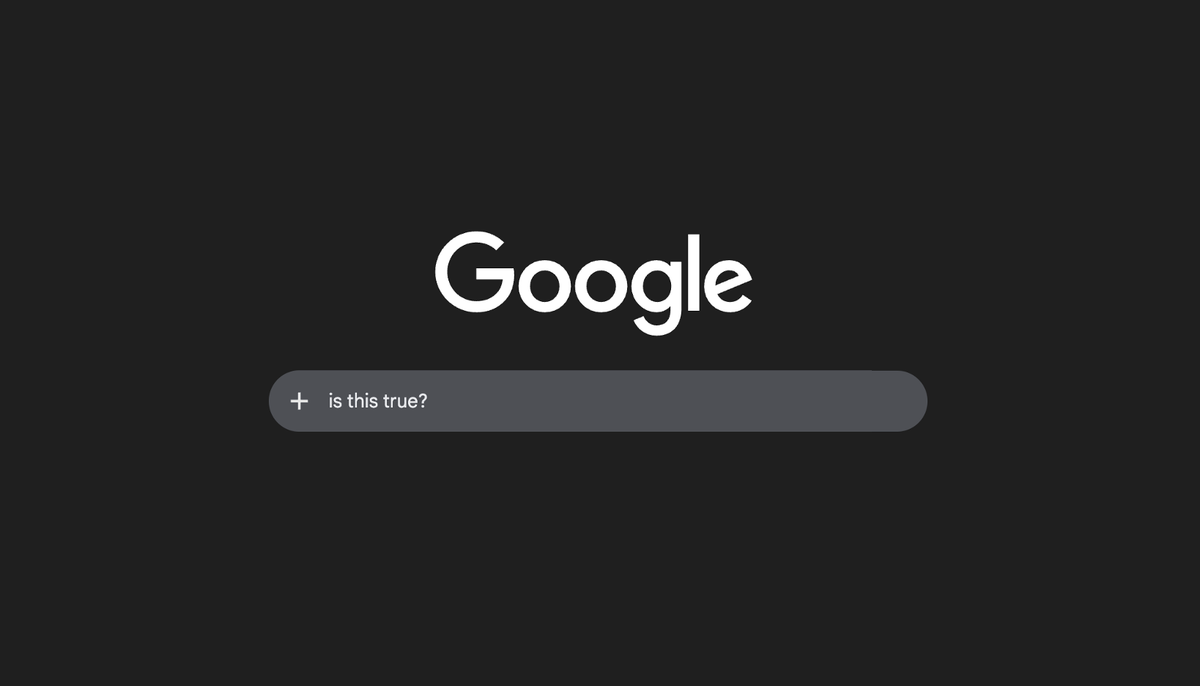
“Where do I find accurate health information?” This question has becoming increasingly common over the last year, especially with the recent changes to the CDC website.
And I’ll confess — I find it pretty difficult to answer.
Common advice says to 1. rely on reputable sources (such as academic or government websites), 2. look for consensus among physicians and scientists, 3. check whether claims are properly cited, and 4. talk to your doctor.
However, none of these methods are foolproof.
People with “MD” after their name sometimes promote highly questionable ideas, and there are many studies that are poorly designed, so a citation alone doesn’t guarantee accuracy (and sometimes citations are made up!) Even “consensus” can be hard to judge: online algorithms often amplify fringe views making them appear mainstream, an effect that’s amplified within our own personal echo chamber. And asking your doctor every question you have is simply not practical, especially for those who don’t have health insurance or have to wait months for an appointment.
If you feel confused where to find answers, you are not alone. Our health information landscape is pretty awful right now.
But, that doesn’t mean you are helpless. I don’t have one magic fix to help you determine if something is true or false, but do have some tips to help you sort through the noise.
1. Recognize red flags
A lot of the health bullshit on the internet can be recognized by a few telltale signs, even if you don’t have a background in science or medicine. Here are the ones I’d watch out for. These don’t guarantee that something is inaccurate (not all wellness products are “bad”), but these red flags should give you pause before believing something:
- You’re being sold something — The wellness industry is valued at an estimated $6.8 trillion dollars and includes everything from beauty products to weight loss programs to supplements to wellness tourism. Unlike healthcare provided by physicians and hospitals, there is very little oversight in how wellness products are marketed — often there is no requirement that companies figure out if their products work before selling them to customers. If health information is paired with a product that’s for sale, be extra suspicious.
- “This will solve all your problems!” — Health is complex and multifactorial, and for most chronic problems, there isn’t one simple fix that will make them instantly go away. Products that claim to be the cure for chronic, complex issues like fatigue, anxiety, digestive issues, sleep problems, and undesired weight gain are often overstating their benefits. If it seems to good to be true, it probably is.
- Anecdotes as evidence — Testimonials and reviews are persuasive, but they don’t replace a scientific study. If the majority of evidence provided comes in the form of stories, reviews, or vibes in the comment section, be suspicious.
- Sciency marketing buzzwords — The wellness industry often disguises marketing as science, hiding empty claims behind jargon that sounds scientific but is so vague it doesn’t really mean anything. Marketing terms like “balance your hormones,” “detox,” “boost your immunity”, “cellular regeneration,” “all natural,” “inflammation,” “anti-aging,” and “promotes gut health” are often smoke screens for unverified products that don’t have robust science behind them.
- Emotionally charged claims — Strong emotions can hijack our critical thinking, which is why they’re used so commonly in marketing. If the information is presented in a way that makes you feel like something terrible is going to happen if you don’t do what they say, step back and look elsewhere for information.
- “Doctors don’t want you to know this!” — Another common marketing trick is convincing customers they have a treatment that doctors don’t know about — or even worse, doctors want to hide from you! While there are real problems with our health care system and doctors are not perfect humans, the vast majority of people in healthcare genuinely want to help their patients and aren’t colluding to hide effective treatments. If “doctors won’t tell you about this,” maybe it’s because it doesn’t work.
2. Sources that are often pretty good (though none are perfect)
So that tells you where NOT to get information, but where should we look instead? Here are some sources that are generally pretty good:
- Academic/university websites like Mayo Clinic or Yale Medicine (look for .edu at the end)
- Professional organizations like the American Academy of Pediatrics, American College of Obstetricians and Gynecologists, etc.
Government websites used to be on this list, but now have some high profile examples of providing misleading information. They are sadly hit and miss.
The Evidence Collective also put together this list of sources (both more formal sources and newsletters like this one) that typically provide reputable information.
What about AI?
AI tools like ChatGPT can provide accurate information, but also sometimes make things up or misstate things. It’s hard to endorse them as a reliable source for this reason. I find they can be useful as a search engine to help direct me to other sources, but always verify any claims by going directly to the source the chatbot cites. If the chatbot doesn’t tell you its sources, just add “please cite your sources” to your question. (You might be surprised how the answer changes when you do that.)
3. Recognize health information is messy and evolving
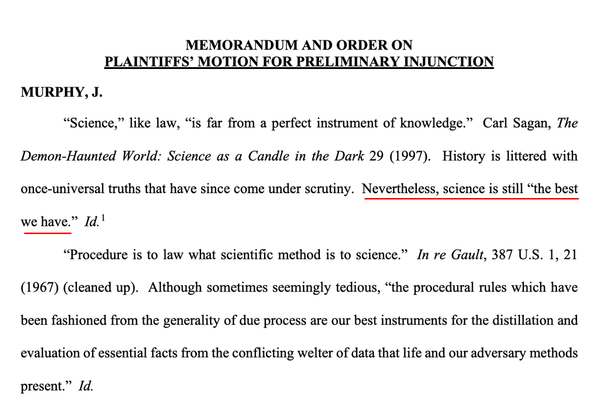
At the beginning of medical school, they told us “half of what you learn now we’ll later discover is wrong — we just don’t know which half.” I doubt the number is truly 50%, but the concept is true: medical science is a work-in-progress, and we’re constantly trying to improve our knowledge of how to take care of people’s health. I started med school in 2012, and some (though certainly not 50%) of the treatments I memorized have already changed.
Uncertainty is part of medical science, and sometimes there is not a clear cut answer to a health question. This is normal. Every single source, doctor, and scientist has at some point been “wrong” because they were operating with the scientific information they had at the time, and as new data emerged, their conclusion changed. This is also normal (and unavoidable). For this reason, a reputable source is not one that has never been wrong — there aren’t any of those. A reputable source is one that 1. reviews the evidence (with the appropriate training to do this well), 2. forms a conclusion based on that evidence, and 3. updates their conclusion when new evidence becomes available. That’s who you should listen to.
Kristen Panthagani, MD, PhD, is completing a combined emergency medicine residency and research fellowship focusing on health literacy and communication. In her free time, she is the creator of the medical blog You Can Know Things, available on Substack and youcanknowthings.com. You can also find her on Instagram and Threads. Views expressed belong to KP, not her employer.